

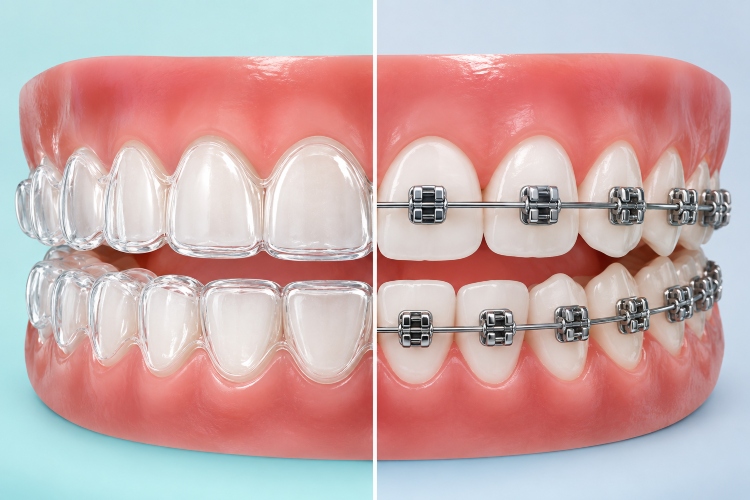
If you want to straighten your teeth, you may be wondering whether ClearCorrect or traditional braces are the better choice. Both treatments can move teeth into healthier, more aligned positions, but they work in different ways and offer different advantages.
ClearCorrect uses a series of removable, clear aligners, while traditional braces use brackets and wires that remain attached to the teeth throughout treatment. The right option depends on your orthodontic needs, lifestyle, treatment goals, and how consistently you can follow your treatment plan.
At Jeppson Dental in Provo, UT, we can evaluate your smile and help you determine which orthodontic option may be the best fit for you.
ClearCorrect vs. Braces at a Glance
What Is ClearCorrect?
ClearCorrect is an orthodontic treatment that uses a series of custom clear aligners to gradually move your teeth. The aligners are designed to fit over your teeth and apply controlled pressure to guide them toward their planned positions.
One of the biggest advantages of ClearCorrect is that the aligners are removable. You can take them out when eating, drinking certain beverages, brushing, and flossing. ClearCorrect can be an appealing option for adults and teens who want a more discreet alternative to traditional braces.
Benefits of ClearCorrect
What Are Traditional Braces?
Traditional braces use brackets attached to the teeth and wires that apply controlled pressure to gradually move teeth. The braces remain in place during treatment and are adjusted periodically by your dental provider.
Because braces are fixed to your teeth, you don't have to remember to put them in each day. This can be an advantage for patients who may have difficulty consistently wearing removable aligners. Braces have also been used for many years and can address a broad range of tooth alignment and bite concerns.
Benefits of Traditional Braces
ClearCorrect vs. Braces: Which Is More Comfortable?
Both ClearCorrect and braces can cause temporary pressure or discomfort as your teeth begin moving. The type of discomfort can be different. With ClearCorrect, you may notice pressure or tightness when switching to a new set of aligners.
Braces may cause soreness after adjustments, and brackets or wires can sometimes irritate the cheeks or lips. Most patients adjust to their orthodontic treatment over time. Your dental provider can explain what to expect based on the treatment recommended for you.
Which is Easier to Keep Clean?
For many patients, ClearCorrect can make daily brushing and flossing simpler because the aligners are removable. With ClearCorrect, you remove your aligners before brushing and flossing normally. You also clean the aligners according to your provider's instructions.
Braces require brushing carefully around brackets and wires. Flossing can also take additional time and may require specialized tools. Regardless of which treatment you choose, good oral hygiene is important.
Keeping your teeth and gums healthy during orthodontic treatment can help support your overall results.
Can You Eat Normally With ClearCorrect?
ClearCorrect allows you to remove your aligners before eating, so you can generally continue eating your usual foods.
With traditional braces, certain hard, sticky, or chewy foods may need to be avoided because they can damage brackets or wires.
ClearCorrect requires you to put your aligners back in after eating and to maintain the recommended wear schedule. This makes lifestyle an important consideration when comparing the two options.