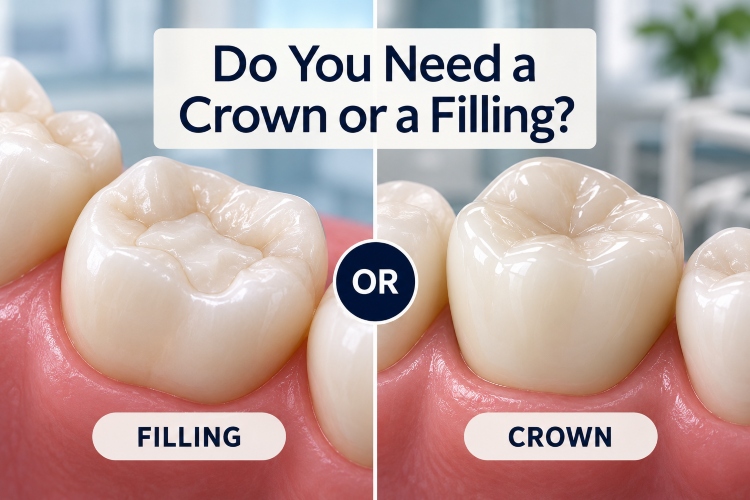
If you have a cavity, cracked tooth, or damaged filling, you may wonder whether you need a dental filling or a crown. Both treatments can restore a damaged tooth, but they are designed for different levels of tooth damage.
In general, dentists use a filling when enough healthy tooth structure remains to repair the damaged area. A dental crown covers the entire visible portion of a tooth when it needs additional strength and protection. The right choice depends on the size and location of the damage, the condition of the remaining tooth structure, and your overall oral health.
At Jeppson Dental in Provo, we aim to preserve as much healthy tooth structure as possible while providing a strong, long-lasting restoration.
What Is the Difference Between a Filling and a Crown?
When Is a Filling Usually Enough?
A filling may be appropriate when a tooth has a cavity or relatively limited damage but still has plenty of healthy structure surrounding it.
Composite dental fillings can be used to restore teeth affected by:
- Small to moderate cavities
- Early-to-moderate tooth decay
- Small areas of tooth damage
- Replacing certain older fillings
With a filling, the dentist removes the decay or damaged portion of the tooth and cleans the area. The dentist then places and shapes a tooth-colored composite material to restore the tooth’s appearance and function.
Because a filling preserves more of the natural tooth, it is often considered a conservative approach when the tooth is strong enough to support it.
When Do You Need a Dental Crown?
Benefits of Traditional Braces
A crown may be recommended when a tooth has lost enough structure that a filling would not provide adequate support.
Common reasons for a crown include:
- A significant fracture or crack
- A tooth that has undergone root canal treatment
- Significant loss of natural tooth structure
A large filling can sometimes leave a tooth vulnerable to further fracture because less natural tooth structure remains to support it. In these situations, a crown can surround the remaining tooth and provide additional protection.
Jeppson Dental offers same-day dental crowns, which can make the restorative process more convenient for eligible patients.
Crown vs. Filling: How Does a Dentist Decide?
Your dentist will typically evaluate several factors before recommending a restoration.
1. How Much Tooth Structure Remains?
This is one of the most important considerations.
If most of the tooth remains healthy and strong, a filling may be sufficient. If a significant portion of the tooth has been lost, a crown may provide better structural support.
2. How Large Is the Cavity?
Dentists commonly treat small cavities with fillings. Larger cavities may require a crown if the remaining tooth structure is too weak to support a filling.
3. Is the Tooth Cracked or Fractured?
A tooth with a significant crack may need more protection than a filling can provide. Depending on the fracture’s location and severity, a crown may help protect the remaining tooth structure.
4. Has the Tooth Had a Root Canal?
Teeth that have undergone root canal treatment may require additional protection because significant tooth structures may have been removed during treatment or lost to decay. In some cases, a crown is recommended to help protect the tooth from fracture.
5. Is There a Large Existing Filling?
A tooth with a large filling may have less natural structure remaining. If the tooth becomes weakened or develops additional damage, replacing the filling with a crown may provide greater protection.
Can a Filling Turn into a Crown Later?
Yes. A tooth that initially receives a filling may eventually need a crown if it becomes significantly weakened or develops additional damage.
This is one reason regular dental examinations are important. Your dentist can monitor existing fillings and look for signs of recurrent decay, cracks, or changes in the surrounding tooth structure.
Treating a problem early may help you preserve more of your natural tooth structure.
Does a Crown Hurt More Than a Filling?
Both fillings and crowns are performed using local anesthesia to keep the treatment area comfortable. You may experience some sensitivity or mild soreness after either procedure, particularly if the tooth was already irritated before treatment.
Discomfort can vary depending on the tooth’s condition and the type of treatment required. Your dentist can explain what to expect based on your specific situation.
How Long Does a Filling or Crown Take?
Treatment time depends on the tooth’s condition and the type of restoration being placed.
A filling can often be completed during a single dental appointment. Crown treatment varies depending on the crown type and the technology used.
Jeppson Dental offers same-day dental crowns, which may allow eligible patients to complete treatment in a single visit rather than scheduling multiple appointments.
How Much Does a Crown or Filling Cost?
The cost of a filling or crown varies depending on several factors, including:
- The size and location of the restoration
- The condition of the tooth
- The type of restoration used
- Whether additional treatment is necessary
- Dental insurance coverage
A filling is generally less expensive than a crown, but cost should not be the only consideration. The appropriate restoration provides the tooth with the support it needs while preserving healthy structure whenever possible.
Jeppson Dental accepts insurance and offers financing options, including CareCredit, Cherry, and an in-office discount option, to help make dental treatment more accessible.
What Happens If You Don't Treat a Damaged Tooth?
Putting off treatment can allow tooth decay or structural damage to worsen.
A small cavity may grow deeper and eventually affect the inner portion of the tooth. A weakened or cracked tooth may also become more difficult to restore if additional tooth structure is lost.
In some cases, delaying treatment can result in the need for more extensive restorative treatment.
That’s why it’s important to have a dentist evaluate a damaged or painful tooth rather than trying to determine whether you need a filling or crown on your own.
Crown or Filling: Which One Do You Need?
The simplest way to think about the difference is:
A filling repairs a damaged portion of a tooth. A crown protects and strengthens a tooth that has lost more of its natural structure.
If your tooth has a small or moderate cavity and plenty of healthy structure remains, a composite filling may be appropriate. If the tooth is extensively damaged, cracked, heavily restored, or weakened, a crown may provide the additional protection it needs.
Your dentist can examine the tooth, evaluate the amount of remaining healthy structure, and explain your treatment options before recommending a restoration.
Protect Your Smile with the Right Restoration
Whether you need a dental filling or crown, treating tooth damage early can help protect your natural tooth and prevent the problem from worsening.
Jeppson Dental provides restorative and general dentistry in Provo, Utah, including composite dental fillings and same-day dental crowns. If you have a damaged, cracked, sensitive, or painful tooth, schedule an appointment for an evaluation.
Don’t wait until a small dental problem becomes bigger. Contact Jeppson Dental to schedule your appointment today.